Dressing as a Wedding Guest.
A ceremony-by-ceremony guide to Indian wedding guest outfits — what to wear, which colours to leave to the bride, and how to look considered without competing.
A wedding guest has a harder brief than the couple. You are dressing for four different rooms across three days — a morning garden, a dance floor, a temple or mandap, and a black-tie reception — and in every one of them the discipline is the same: be beautifully dressed, and never read as the bride.
At our Bhopal atelier we make guest wardrobes as carefully as bridal ones. What follows is the guidance we give clients when they bring us an invitation and ask the only question that matters: what do I wear?
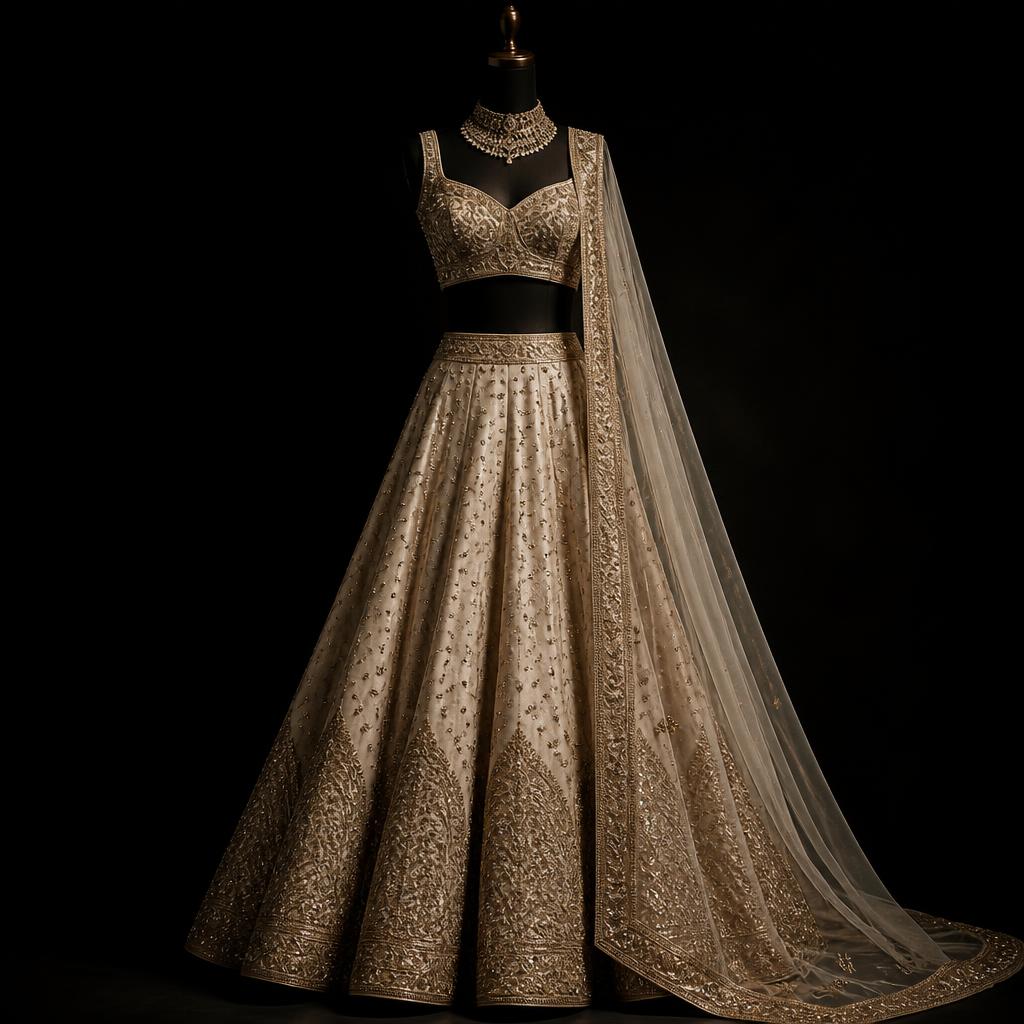
Mehendi
- The Room
- Daytime, outdoors, seated at length
- Silhouette
- Lightweight sharara, palazzo set or a soft cotton-silk kurta set
- Palette
- Marigold, leaf green, turmeric, coral — colour is celebrated here
- Fabric
- Cotton silk, chanderi, mulmul, light organza
- Leave Behind
- Heavy zardozi and long trailing dupattas — you will be sitting on the floor for hours, and henna transfers onto delicate fabrics.
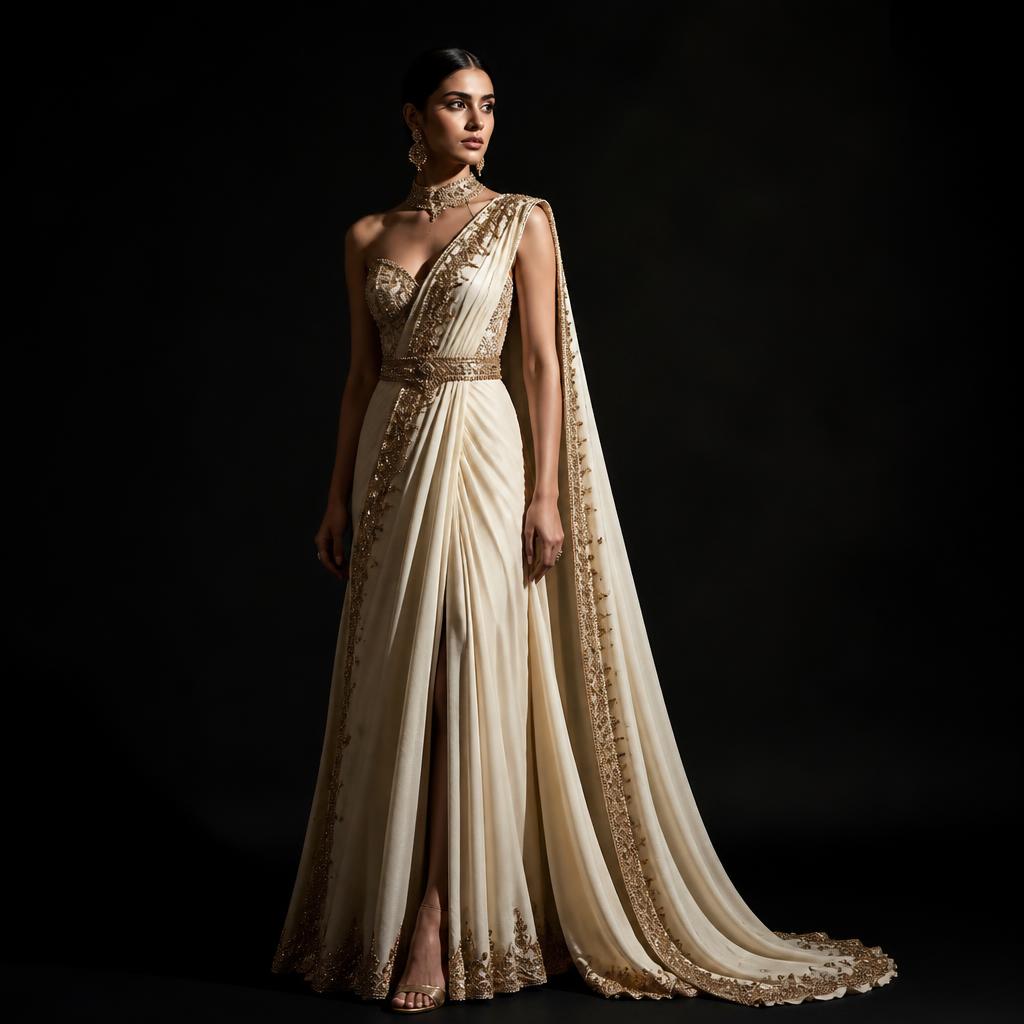
Sangeet
- The Room
- Evening, dancing, photographed constantly
- Silhouette
- Fluid lehenga, draped saree-gown or an Indo-Western cape set
- Palette
- Midnight, emerald, wine, and metallics that catch stage light
- Fabric
- Georgette, crepe, tulle — anything that moves with you
- Leave Behind
- Stiff canvas skirts and heavily beaded hems. If you cannot dance in it for two hours, choose again.
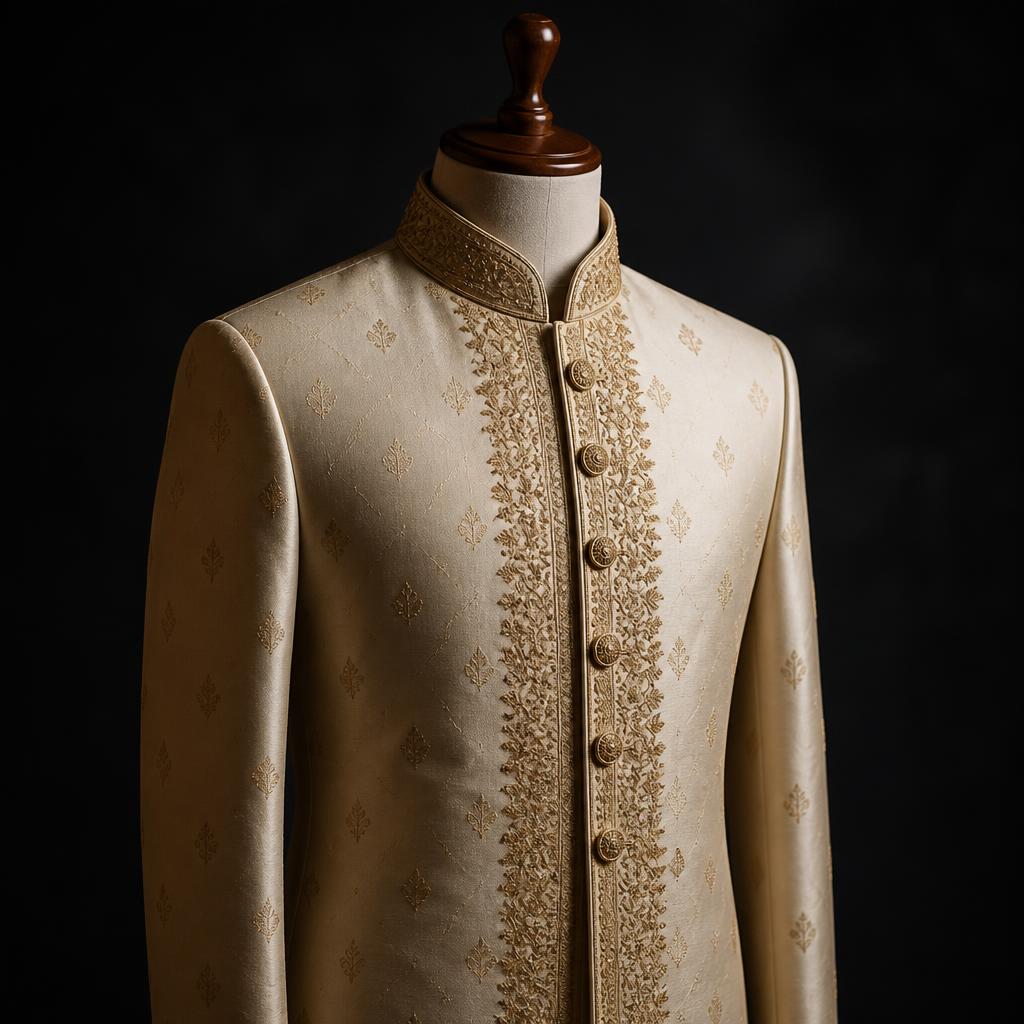
The Ceremony
- The Room
- Early morning or evening, traditional, family-facing
- Silhouette
- Classic saree, anarkali or a full traditional lehenga
- Palette
- Ivory, blush, champagne, soft gold — deferential, never bridal red
- Fabric
- Banarasi silk, kanjivaram, tissue silk, hand-woven cotton silk
- Leave Behind
- Red, scarlet and full bridal ivory-and-gold. The single rule of guest dressing is that you never read as the bride.
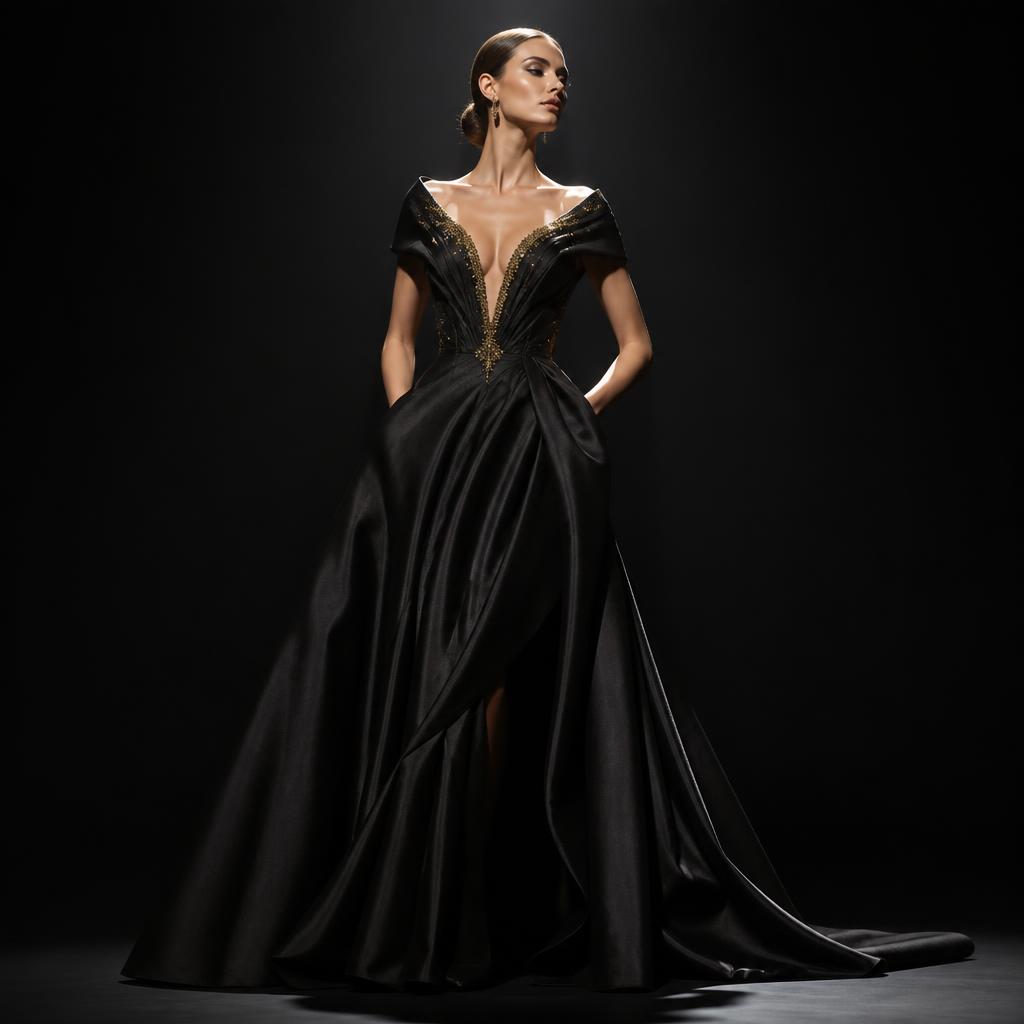
Reception
- The Room
- Late evening, formal, indoors
- Silhouette
- Sculpted evening gown, cocktail saree or a bandhgala for men
- Palette
- Black, deep navy, pewter, oxblood with restrained gold detail
- Fabric
- Silk crepe, velvet, structured satin
- Leave Behind
- Daytime brights and casual cottons — the reception is the most formal room of the weekend.
Guest Dressing, Answered.
The four questions we are asked most often when a client arrives with an invitation.
Can wedding guests wear black to an Indian wedding?
At a reception or sangeet, yes — black with gold detail reads as quiet luxury and photographs beautifully under evening light. For traditional daytime ceremonies, many families still consider black inauspicious, so choose ivory, champagne or a jewel tone instead.
What colours should guests avoid at an Indian wedding?
Avoid bridal red and scarlet, and avoid full ivory-and-gold bridal combinations. Also skip white-on-white in traditional Hindu ceremonies, as white is associated with mourning.
How dressed up should a wedding guest be?
Match the formality of the ceremony, not the bride. Daytime functions are lighter and more relaxed; the sangeet and reception are the two moments to wear your most considered piece.
How far in advance should guest outfits be commissioned?
For bespoke pieces with hand embroidery, allow six to eight weeks. Lighter pret and Indo-Western silhouettes can be made in three to four weeks at our Bhopal atelier.
Dressed for their day. Made for you.
Our Indo-Western, saree-gown and designer lehenga lines are made to measure at the Bhopal atelier — typically three to eight weeks, depending on embroidery.